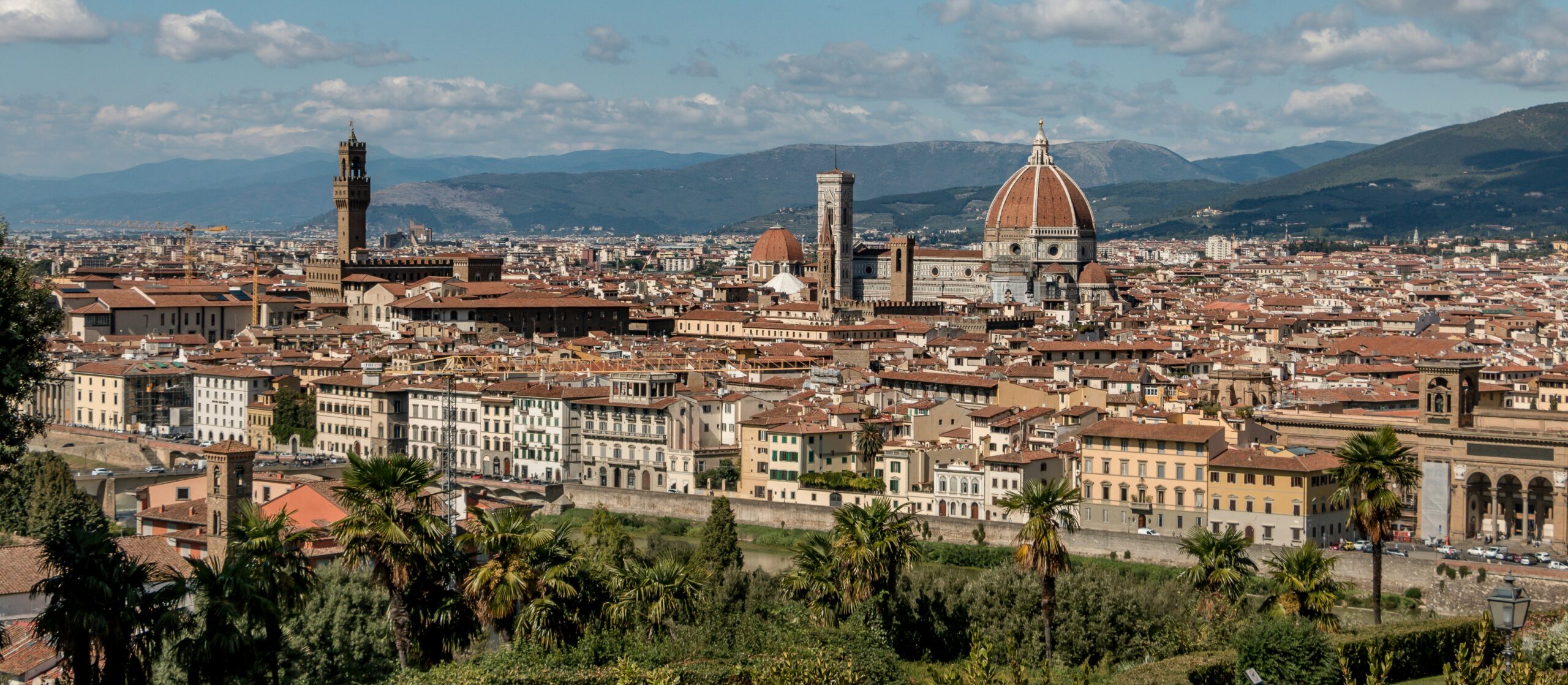
A deep and meaningful relationship exists between a work of art and the place in which it came into being. Plays, works of visual art, music, dance, architecture, novels, poems, and all kinds of work marked out as “art” by its culture are profoundly shaped by the place in which the artist, author, or performer lived and worked. FSEM sections of Art and Place explore these connections, looking at artistic traditions which develop in one particular place.
This particular FSEM explores the central Italian city of Florence as the origin of many artworks and buildings held dear by people around the world. The course is not a survey, but rather selects and examines some of the essential works, buildings, and artists from the heyday of Florentine creativity, the fifteenth through seventeenth centuries. Later in the semester, we also look at two key moments from the twentieth century: the ground-breaking influence that the tragic 1966 flood had on the creation of art conservation as a field and the impact of World War II on the saving of artworks during war. Both of those moments allow us also to discuss the later history of works of art and our responsibility to care for them. While we will learn and practice some basic art historical methods such as visual analysis, the course’s approach is truly interdisciplinary.